1. Introduction: The Biggest Revolution in Aviation History (2030–2040)
The probe picks up a powerful signal from the near future: in just five to ten years, the word “airplane” will sound as outdated as “propeller plane” does today. What kind of transformation is racing through the skies?
Scanning deeper: imagine kerosene-guzzling giants retiring as swiftly as the Concorde once did. By 2033, the last pure kerosene widebody will be museum-bound. By 2035, 99% of new aircraft sold will feature electric, hybrid, or hydrogen propulsion, AI-driven cockpits, and sustainable designs. By 2040, over half of global flights could run on zero-emission tech, urban air taxis, or even suborbital hops—blurring the line between aviation and space travel.
Key signal: this isn’t science fiction. As of 2025, we already have funded prototypes, certified tests, and commercial launches underway.
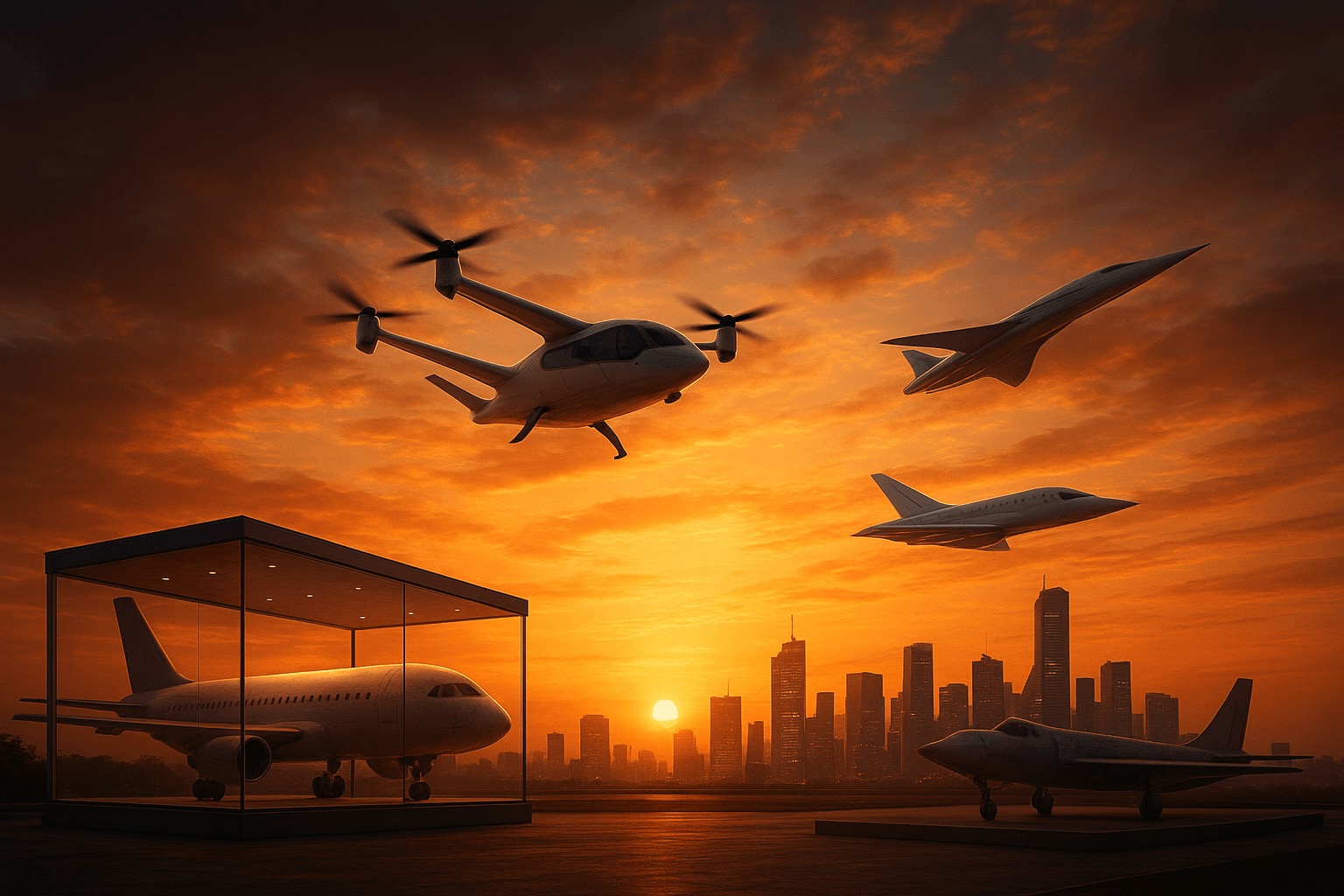
Three unstoppable waves reshaping the skies
-
Electric and Hydrogen Propulsion Replaces Jet Fuel
2025: Early eVTOLs from Joby and Archer enter commercial service on urban routes.
2028: Hybrid-electric regional jets get certified; Airbus hydrogen prototypes take flight.
2035: Full hydrogen commercial flights for medium-haul routes; electric dominates short-haul. The electric aircraft market reaches USD 37 billion by 2030. -
AI Becomes the Co-Pilot — and Eventually the Only Pilot
2025: AI already optimizes routes and predicts maintenance across fleets.
2030: Single-pilot operations become standard; autonomous cargo flights are routine.
2038: Fully autonomous passenger flights gain regulatory approval, with AI handling 90% of decisions. The AI in aviation market grows to USD 4.86 billion by 2030. -
Supersonic and Suborbital: Speed Redefines Distance
2025: Boom Overture prototype rollout; XB-1 has already gone supersonic.
2029: First commercial supersonic flights at Mach 1.7.
2038: Hypersonic options emerge; suborbital tourism merges with conventional aviation. The space tourism market explodes to USD 10 billion by 2030.
What You’ll See by 2030
- $500 air taxis zipping between cities, killing traffic forever.
- Real-time AI translating cockpit communications globally—no more language barriers.
- Personalized flights: AI anticipates your needs, from seating to meals.
- Hydrogen jets powered by advanced fuel cells that last weeks.
- Boomless supersonic flight over land—New York to London in under 4 hours, quietly.
An Ordinary Morning in 2040
You wake up. No ticket counters. No jet fuel smell.
Think “Tokyo meeting”—an eVTOL or hydrogen jet appears via app.
Your AI pilot greets you: “Optimal route selected, zero emissions.”
Holographic windows reveal Earth’s curve during a suborbital hop.
You land refreshed, no jet lag.
Key signal: every person will have access to cleaner, more efficient flight than all of humanity combined had in 2025. Global demand doubles, while emissions plummet.
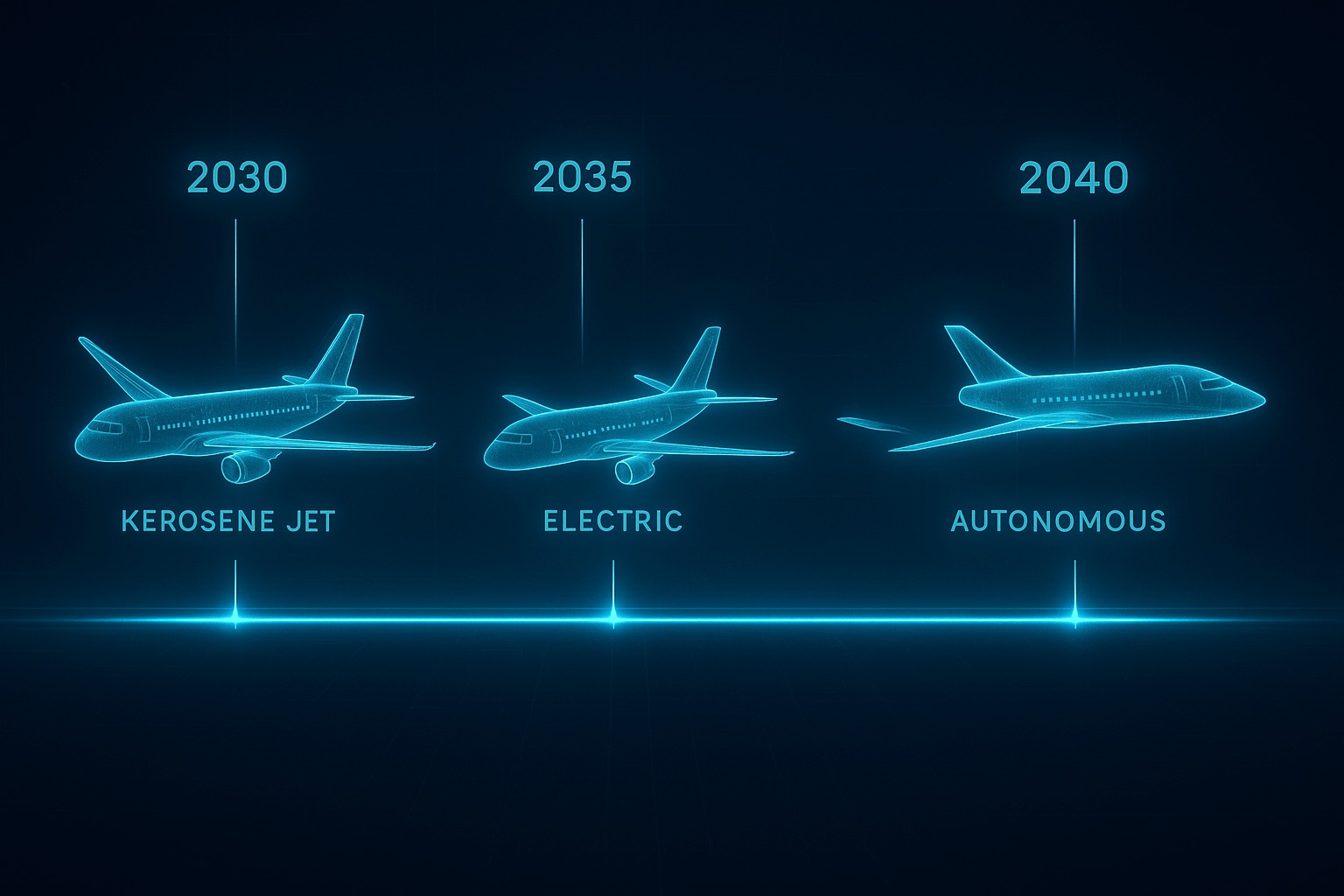
Billions already invested, regulations evolving—today’s flights will amuse your grandkids the way biplanes amuse you.
The probe completes its scan and fades into shadow: the sky becomes as natural and effortless as breathing.
Ready for flights that feel like pure thought?